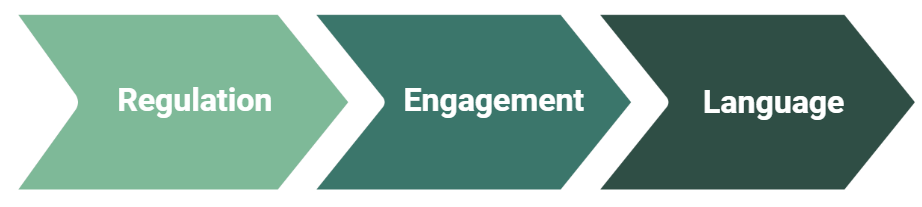
When we support a child’s communication, we don’t start with words. We start with how their body feels, and how connected they are to the person they’re playing with. Here’s why regulation and engagement come first, and how you can support both at home.
What is regulation?
Regulation means having the right amount of energy for what you’re doing. Your child might need a calm body for story time, but more energy for running, climbing or active play.
Everybody needs different things to feel regulated. Some children need lots of movement, while others enjoy deep pressure, like crashing into cushions or burrowing into the couch. Some children love loud, busy environments, while others find them overwhelming. None of these is better or worse. They’re just different ways of feeling settled and ready.
How to support your child’s regulation
Working with an occupational therapist (OT) can help you and your therapy team understand your child’s sensory needs and what helps them feel regulated.
Always start here. If a child isn’t regulated, they’re less likely to engage with you, and less likely to learn or use language. Regulation is the foundation everything else is built on.
What is engagement?
Engagement is about how involved, interested or connected your child is with an activity. Before we begin modelling language, we think about who or what they’re sharing their attention with.
When children are engaged with their communication partner, they’re more likely to learn from them, especially when that partner is naturally modeling language with no demand or expectation that the child repeats it back.
How to support your child’s engagement
A few things that help:
Sharing attention during object play can be tricky for young children. Starting with people games, like peekaboo, chasey and tickles, supports shared enjoyment and connection.
Follow your child’s lead and build around the things they’re interested in.
Reduce expectations and demands during play. No one likes to be tested while they play.
And then language
Once your child is regulated and engaged, they’re well positioned to learn all sorts of skills through play, including language.
This framework is just as useful for thinking about how your child uses language. When your child is regulated and engaged, they have the capacity to reach for and use words from their vocabulary. During times of dysregulation, accessing those words and getting them out becomes much harder.
So when communication feels difficult in a moment, it’s worth asking: is my child regulated right now? Are we connected? Often, supporting those two things first is what opens the door to the words.
We can help you build the foundations
If you'd like support understanding your child's regulation, engagement and language, our speech pathologists and occupational therapists work together to help. There's no cost to ask, and no referral needed to get in touch.